HCS Prelims GS Paper Analysis 2026: Subject-Wise Trends
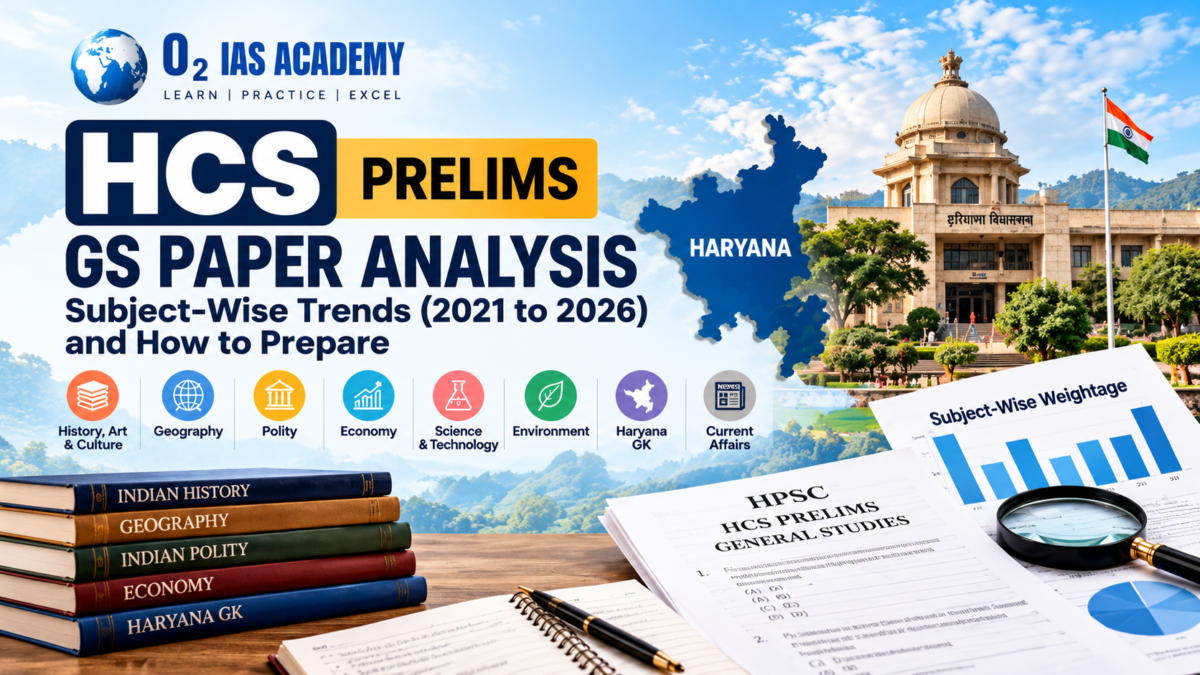
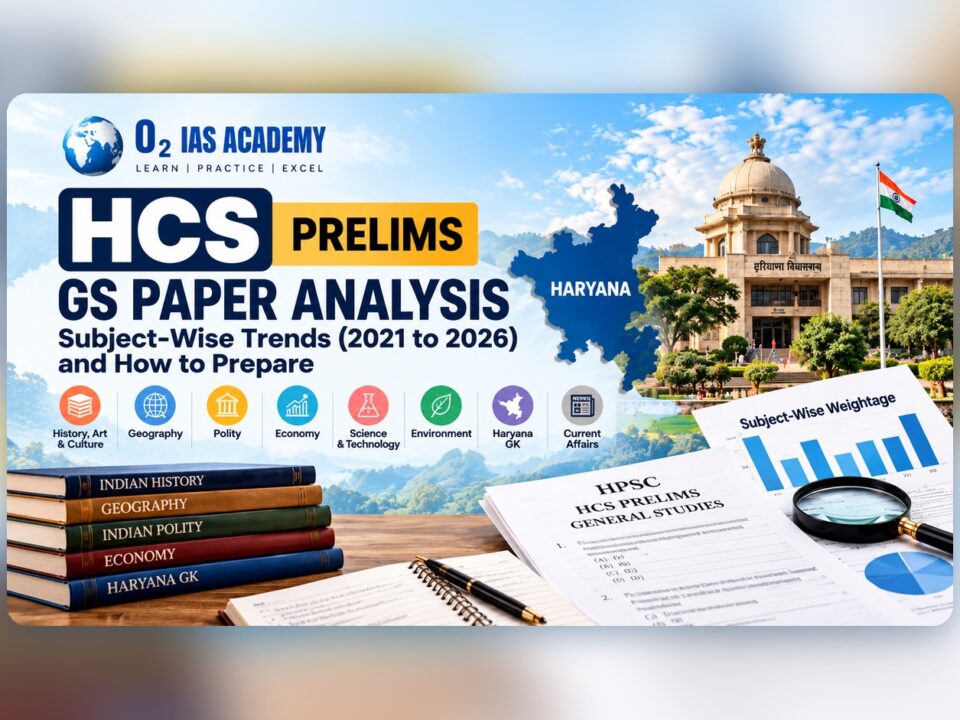
HCS Prelims GS Paper Analysis: Subject-Wise Weightage and Preparation Strategy
Preparing for the Haryana Civil Services (HCS) Prelims requires more than completing the syllabus. Reviewing previous-year question papers (PYQs) can help you identify recurring topics, understand question patterns and plan your revision more effectively.
This analysis summarises the estimated subject-wise distribution in the papers included in the source data and highlights the areas to prioritise during preparation.
How to use this analysis: Treat the weightage figures as estimates for planning revision, not as a prediction of the next paper. Verify the counts against the original HPSC question papers before relying on them.
Year-Wise Subject Weightage Trend in HCS Prelims GS
The following table reproduces the estimated counts supplied for the five listed papers: 2021, 2022, 2023, 2024 and 2026. The 2025 paper is not included in the supplied table.
On mobile, swipe horizontally to view all columns →
| Subject | 2021 | 2022 | 2023 | 2024 | 2026 | Trend noted in draft |
|---|---|---|---|---|---|---|
| History, Art & Culture | 18 | 20 | 22 | 18 | 20 | Consistently high; Ancient/Medieval terminology and freedom struggle |
| Geography | 12 | 15 | 14 | 16 | 12 | Steady; physical geography, mapping and Indian resources |
| Indian Polity | 15 | 12 | 14 | 14 | 10 | Articles, committees, judgments and conceptual details |
| Economy | 10 | 12 | 10 | 15 | 12 | Macroeconomics and banking terms |
| Science & Technology | 15 | 14 | 12 | 15 | 16 | General biology, basic chemistry and space missions |
| Environment | 5 | 8 | 6 | 8 | 8 | Climate agreements, pollution and conservation |
| Haryana GK | 10 | 10 | 12 | 8 | 14 | State schemes, local history and geography |
| Current Affairs / Misc. | 15 | 9 | 10 | 6 | 8 | Some current events may overlap with static subjects |
Note on the figures: These are estimates from the supplied analysis, not an official HPSC subject classification. Confirm the year labels, counts and counting method against the original papers before publication. Current affairs may overlap with static subjects, so category totals need careful interpretation.
Key Subject-Wise Trends in HCS Prelims GS
1. History, Art & Culture
This is the largest category in the supplied table, ranging from 18 to 22 questions across the listed papers. The draft highlights Ancient and Medieval terminology, administrative systems, chronology and the freedom struggle.
2. Science & Technology
The supplied estimate reaches 16 questions in 2026. Revise everyday science, biology, common chemical compounds, optics and space missions mentioned in the source analysis.
3. Geography
The estimated count ranges from 12 to 16. The source analysis highlights physical geography, landforms, drainage patterns, Indian soils, rivers and mineral distribution.
4. Indian Polity
The supplied estimate falls to 10 questions in 2026. Areas identified include constitutional schedules and amendments, judicial doctrines, Panchayati Raj and parliamentary committees.
5. Economy
The estimated count ranges from 10 to 15. Topics include GDP and GNP, disguised unemployment, per-capita income, poverty measurement and banking terms.
6. Haryana GK
The estimate rises to 14 questions in 2026 after 8 in 2024. The draft identifies state budget topics, local history, district-specific events, geography, fairs and folk dances.
7. Environment
The table records an estimated 5–8 questions. The draft highlights international conventions, biosphere reserves and species conservation status.
8. Current Affairs / Miscellaneous
The separate count falls from 15 in 2021 to 8 in 2026 in the supplied table. This does not mean current affairs can be ignored; some events may be integrated into static subjects.
Subject-Wise HCS GS Paper Analysis and Topics to Revise
History: Ancient, Medieval and Modern India, and Art & Culture
The supplied analysis points to specific terminology, administrative systems and chronology-based questions. Topics to review include Harappan sites and findings such as Rakhigarhi; the Mansabdari and Dahsala systems; important treaties, revolts and leaders associated with the 1857 uprising; temple architecture; folk dances; and traditional textiles.
Geography: Physical, Indian and World
Topics to revise are Geomorphology concepts like drainage patterns (trellis, dendritic), types of rocks, and landforms (e.g., Lapies, Seif, Horn). Indian geography frequently asks about soil types (Laterite, Black soil), river tributaries, and mineral distributions (manganese, iron ore).
Indian Polity
The topic list goes beyond basic constitutional Articles to include schedules, amendments and judicial doctrines. Areas identified include the Basic Structure Doctrine and the Kesavananda Bharati case, judicial review, the Anti-Defection provisions, Scheduled Areas, Panchayati Raj, the Inter-State Council and the Public Accounts Committee.
Economy
Basic concepts like GDP vs. GNP calculation, disguised unemployment, and per-capita income limitations. Banking regulations (Prompt Corrective Action, Corporate Debt Market). Poverty measurement indices and committees (Tendulkar committee).
Science and Technology
The supplied topic analysis emphasises applications of basic science and recent space missions. It lists human anatomy, genetic and bacterial diseases, plant hormones, bleaching powder, baking soda, saponification, basic laws of physics, mirrors and lenses, XPoSat and Aditya-L1.
Environment
Topics to revise are treaties like the Kyoto Protocol, Kigali Amendment, and Basel Convention. Biosphere reserves (Nilgiri) and species status (endangered vs. vulnerable).
Haryana GK
Give Haryana-specific preparation a dedicated place in your timetable. The supplied analysis lists state budget figures, fiscal deficit and revenue sources; historical references such as the Treaty of Surji-Anjangaon and George Thomas; local leaders associated with the 1857 revolt; the Bagar tract; Sahibi and Markanda drainage systems; Loor dance; and Phalgu Mela.
Current Affairs and Government Schemes
Topics to revise are Schemes like PM Sahaj Bijli Har Ghar Yojana, BharatNet, and state-specific initiatives like Parivar Pehchan Patra. Major global events, UN deployments, and international corridors (IMEC).
How to Prepare for HCS Prelims GS
Build a foundation in static subjects using standard textbooks, then test your understanding with previous-year questions. Because the supplied analysis identifies multi-statement and match-the-following questions, pay attention to chronology, exceptions, definitions and the details that distinguish similar options.
Connect current affairs with static subjects. For example, when revising a space mission, revisit the related science concepts; when studying a government scheme, note its purpose, target group and the subject area it connects to.
Keep Haryana GK in your weekly plan and use the latest state budget and economic survey, alongside district-wise history and cultural material, after checking the relevant official sources.
Use previous-year papers as a regular practice tool rather than leaving them until the end. Attempt papers under timed conditions, review every incorrect answer and keep a short list of topics that need another revision.
High-Priority Subjects for HCS Prelims GS
The priority order below reflects the estimates in the supplied table, not an official prediction of the next paper.
High priority: start here
- History, Art & Culture: The largest category in the supplied estimates.
- Science & Technology: The supplied table records 16 questions in 2026.
- Geography: The estimated count remains within a range of 12–16 questions.
- Indian Polity: Continue revising constitutional provisions, amendments and institutions.
Medium priority: prepare consistently
- Economy: Revise core concepts, banking terms and poverty measurement.
- Haryana GK: Keep state history, geography, schemes, budget and culture in the weekly timetable.
Smaller categories that still need revision
- Environment: Revise conventions, protected areas and conservation terminology.
- Current Affairs / Miscellaneous: Link current events to relevant static topics instead of treating them as a separate reading list only.
Planning tip: Use the table to guide your time allocation, but verify the claim that the top four subjects account for around 60 questions before publishing it. Do not skip syllabus topics solely because their estimated count is lower.
How to Revise for the HCS Prelims GS Paper
- Revise in short cycles. Revisit a subject within a week of studying it, again after about a month, and once more before the exam.
- Make concise subject-wise notes. Keep dates, committees, Articles, treaties, schemes, district names and facts that are easy to forget.
- Use PYQs after each topic. This helps you recognise how HPSC frames questions, particularly multi-statement and match-the-following questions.
- Give Haryana GK a fixed weekly slot. Revise the state budget, economic survey highlights, district-wise history, fairs, folk dances and local geography.
- Connect current affairs with static subjects. Record the relevant background whenever you study a new scheme, event or scientific development.
- Take full-length mock tests. Review wrong answers and the reason behind each mistake, not just the score.
- Practise elimination. In multi-statement questions, use statements you know with confidence to eliminate implausible options.
A simple last-30-day revision plan
| Period | Focus |
|---|---|
| Days 1–15 | Revise priority subjects and Haryana GK using concise notes. |
| Days 16–25 | Solve PYQs and mock tests; revisit weak topics. |
| Days 26–30 | Focus on light revision of prepared notes and avoid adding large new resources. |
Common Mistakes to Avoid
- Spending disproportionate time on current affairs while neglecting static subjects and Haryana GK.
- Treating Haryana GK as a last-minute topic.
- Collecting too many books instead of revising a manageable set of reliable resources.
- Leaving previous-year questions until the final stage of preparation.
- Memorising isolated facts without understanding the concepts and exceptions used in statement-based questions.
Practise with HCS Previous-Year Papers
HPSC HCS Previous Year Question Papers
Use previous-year papers to test whether your preparation matches the question styles discussed in this analysis. Solve questions under timed conditions and review the topics where you lose marks.
Explore HCS PYQs →Explore HCS Courses and Test-Series Options
After revising the core subjects, use a structured test series to practise under timed conditions, identify weak areas and review your performance.
Explore HCS Courses →Need Guidance for HCS Prelims Preparation?
Not sure how to prioritise subjects, use PYQs or plan your revision? Connect with the O2 IAS Academy team to discuss your preparation and next steps.
HCS Prelims GS Paper: Frequently Asked Questions
Which subject has the highest weightage in the HCS Prelims GS paper?
In the supplied estimate table, History, Art & Culture has the highest count, ranging from 18 to 22 questions across the listed years. Verify the figures against the original papers before using them as a prediction.
How important is Haryana GK for HCS Prelims?
The supplied table estimates 8–14 Haryana GK questions across the listed years. Keep it in your regular study plan and verify the counts before using them to predict the next paper.
Is Science and Technology becoming more important in HCS Prelims?
The supplied table records 12 questions in 2023, 15 in 2024 and 16 in 2026. Treat this as an estimated trend from the included papers, not a guarantee for the next exam.
Has the weightage of Indian Polity changed?
The supplied estimates range from 10 to 15 questions and show 10 in 2026. The draft lists schedules, amendments, committees and judicial cases among the topics to revise.
Does a lower Current Affairs count mean current affairs can be ignored?
No. The draft suggests that some current events may be counted within static subjects such as Economy, Environment and Science & Technology. Continue linking current affairs with these subjects.
Which question formats should HCS aspirants practise?
The supplied analysis highlights multi-statement and match-the-following questions. Chronology and careful comparison of similar facts are also useful practice areas.
How should I use subject-wise weightage analysis?
Use it as one input for allocating study time. Do not skip a subject solely because its estimated count is lower; combine trend analysis with the official syllabus and your mock-test performance.
Are these subject-wise counts official?
No. They are estimates in the supplied draft. Cross-check them against the original HPSC papers before publication or using them to make strong claims.
Final takeaway: The supplied analysis points to History, Art & Culture, Science & Technology, Geography and Polity as major areas to prepare, while Haryana GK deserves regular attention. Use the estimated trends to organise revision, but let the official syllabus, verified PYQs and mock-test review guide your final plan.